
What is the Food Waste Recovery Hierarchy?
There are many ways to reduce food waste in the United States and around the world — and thanks to the Food Recovery Hierarchy developed by the US Environmental Protection Agency (EPA), we have a tiered system that prioritizes prevention and then diversion of wasted food. Created as an inverted pyramid, the top levels of the Hierarchy are most favorable, trickling down to the last stage of waste sent to landfills. Here’s how the Hierarchy flows:
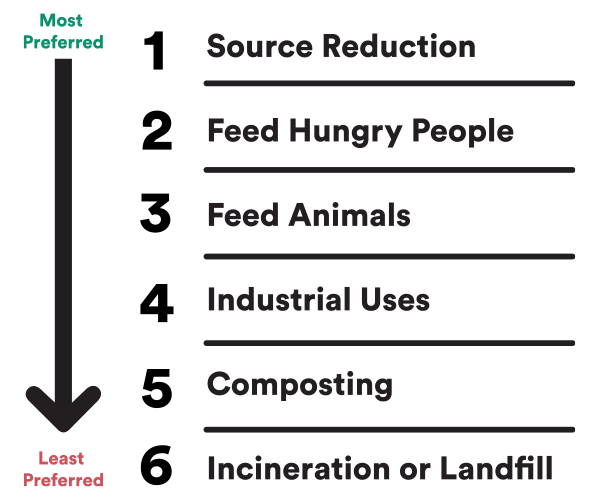
Source Reduction
This goes back to the simple lesson of “only take what you need.” If we buy and create less food, we’ll throw less out. This is about simply reducing waste by not creating it in the first place.
Feed Hungry People
Much of the food we throw out is perfectly edible. With 50 million people expected to suffer from food insecurity in 2022 alone, this is unacceptable. Food banks and shelters across the country would welcome the food that many Americans throw away.
Feed Animals
Humans aren’t the only ones who need to be fed — our animals need sustenance too. Those food scraps we toss after dinner each night — that will surely end up in a landfill — can be saved for feeding farm animals, diverting more food waste from needlessly being thrown out.
Industrial Uses
Did you know that some of the food you toss can be used to create biofuel and bio-products that could power your car? The earth has provided alternative energy in the form of sun and wind. Why shouldn’t our food be yet another way to source power?
Composting
Near the bottom of the Food Waste Recovery Hierarchy is something every single person is capable of doing: composting their food waste. Composting not only prevents your food waste from entering a landfill (and creating even more greenhouse gases), but also improves soil and water quality that in turn, help future crops grow.
Landfill/Incineration
This is the bottom of the Food Waste Hierarchy — and the last, final resort to the waste that we produce. Avoiding this tier starts with each and every one of us, by preventing waste at the top of the tier — right where it’s sourced and where we can make different decisions about how much we take, buy and create.