
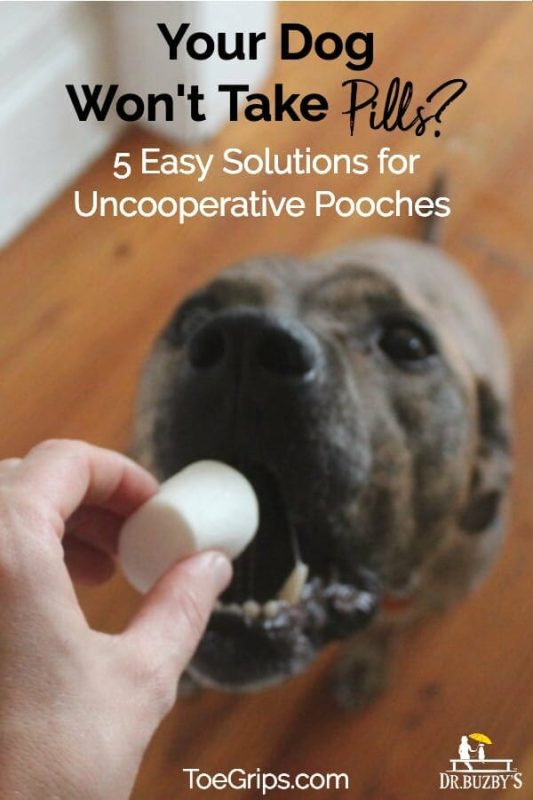
Your dog won’t take pills? As I pried my dog’s jaws open to give him his medicine, I realized that, as a veterinarian, prescribing the appropriate medication for your dog is only half of the battle! What about YOU—standing ready, holding a pill, looking at your dog while your dog looks back at you, both wondering who’s going to win?
The answer, my friend, is YOU! As an integrative veterinarian and mom of three dogs, here are five of my favorite tips, tricks, and techniques for how to get your dog to take a pill.
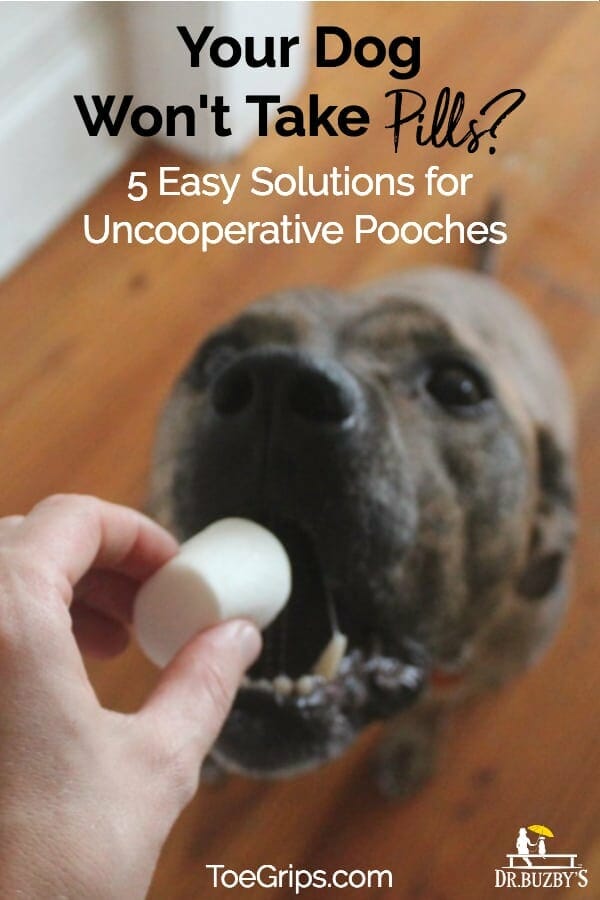
1. The Bribe: For the food-motivated dog who won’t take pills
If your dog is food motivated, this technique is the obvious choice—and hopefully a foolproof way to get your dog to take pills. You can simply hide the pill in:
- Marshmallows—My personal favorite “bribe” in which to hide pills is marshmallows (or mini-marshmallows, depending on your dog’s size). I don’t worry about them causing pancreatitis (more on this soon), and it’s an inexpensive, low-calorie treat.
- A dab of peanut butter—Please make sure that xylitol is not on the ingredient list! It has become a common sweetener in peanut butter, but xylitol is highly toxic to dogs. Also, I prefer “chunky” peanut butter because it’s easier to disguise the texture of a pill among the chunks.
- Plain yogurt or plain greek yogurt—But please keep in mind that yogurt can cause GI upset in dogs who don’t handle lactose well. Plus, it is important to know that giving antibiotics with calcium-rich foods is a “no no” as it may make the antibiotics less effective.
- A cube of cooked boneless chicken breast or sliced turkey (NOT deli turkey or deli chicken as they are too high in sodium).
- Liverwurst—A small amount will do as it is very rich.
- Hot dog pieces—Always cut hot dog discs into halves or quarters to reduce the chances of your dog choking.
- Greenies Pill Pockets®(or similar products)—This brilliant invention is a chewy dog treat with a hole inside for the pill or capsule. You insert the medication into the pocket, and then press the malleable treat around the pill to hide the evidence. Dogs generally love them! The downside is that they are not cheap, nor something you would normally have handy in your kitchen. Pill Pockets are sold through veterinarians and pet supply stores.
Above all do no harm.
The reason I left cheese, cream cheese, and ice cream off my “recommended” list is because I don’t want to take the risk of triggering pancreatitis through rich foods. Pancreatitis in dogs is a painful, serious inflammatory condition of the pancreas which can be caused by a dog eating high-fat foods.
If you have a pancreatitis-prone pup, you should also be cautious about using peanut butter or meat (turkey, chicken, hot dogs, or liverwurst) when trying to figure out how to give a dog a pill. These foods can also be higher in fat. They are less of a concern in my mind than cheese, cream cheese, and ice cream, but it is still important to be judicious about which dogs you give them to.
Additionally, when picking a food to put your dog’s pills in, keep your dog’s medical conditions in mind. Higher sodium foods can be problematic for dogs with kidney disease in dogs or heart disease in dogs. And dogs who are on prescription diets (for allergies or other conditions) may be better served to take their pills in a small amount of the canned version of their prescription diet. That way you know that the food you are hiding pills in meets your dog’s specific dietary aims.
If you are trying to figure out if a food or treat is right for your dog, check out my post on the 11 best foods to hide dog pills in. And also talk to your veterinarian! He or she has the ultimate say in which foods are, or are not, safe or appropriate for your dog.
2. How to get your dog to take a pill using “the bait and switch” method
For dogs who are tempted by “The Bribe,” but too smart for their own good, I employ “The Bait and Switch” method of getting dogs to take pills. This technique becomes second nature to most veterinarians who have learned the hard way—after scraping saliva-covered, mostly dissolved pills off the floor after a dog has spit them out—that it’s very important to have success on the first try.
Trust me, round two is ten times harder than round one, because of the state of the pill and the heightened state of the dog’s radar.
So unless I know the dog will basically eat anything, I always administer pills in this fashion:
1. Hide the pill in food or treats2. Wash hands. (Yes, seriously. It’s amazing how you can ruin the whole process by having the smell of medication on your hands. Remember, a dog’s sense of smell is 10,000 times better than yours.)3. Get two more of the same treats used to hide the pill in. For example, if I’m using hot dog pieces, when I’m ready to give the pill, I approach the dog with three hot dog pieces—and an innocent look.4. Give the first treat without a pill in it. THE BAIT!5. Give the second treat with the pill in it. THE SWITCH!6. Give the third treat without a pill in it. THE HAPPY ENDING!
3. How to get your dog to take a pill using the “trick and treat” method
Occasionally, we have to up the ante. The “Bait and Switch” may have run its course and your dog has become wise to your antics, or your dog never fell for it in the first place. To have success giving medicine to these dogs, we must employ mind games.
- I do not recommend letting these astute dogs see you preparing the medication prior to administration. You will have to put the pills in the treats while your dog is occupied elsewhere. Do not let your dog see the medication bottle or hear it being handled. Remember the advantage of the element of surprise!
- Wash your hands after working with the pills. This step is critical.
- The Goal: Make your dog feel that the treat is an earned reward or special treat and there is nothing to be suspicious about. There are a few ways to do this:
- Have your dog perform a trick or two, for which he typically earns a treat. We’ve now put him in the mindset to expect/ask for a medication-laced treat. Give the spiked treats (ideally in the “Bait and Switch” sequence) as his reward.
- It’s key for the dog to swallow the treat rapidly, without taking time to chew. If your dog bites into the pill, certain medications like tramadol for dogs and metronidazole are so bitter tasting that your dog might even foam at the mouth. To avoid this, you can toss the treats to the dog and have him catch them. Speak to your dog in a happy, excited voice and build anticipation for the treats you are about to toss, so that he eagerly snaps them up and looks for more.
- Just like us, dogs are tempted by the forbidden. Feeding your dog his disguised medication off of a fork or spoon, or off of your own plate (strategically placed on the floor immediately after a meal) can yield uncanny success.
- Have your dog perform a trick or two, for which he typically earns a treat. We’ve now put him in the mindset to expect/ask for a medication-laced treat. Give the spiked treats (ideally in the “Bait and Switch” sequence) as his reward.
- Let’s face it. Dogs read us like an open book. If you approach getting your dog to take a pill with a guilty look or even feeling guilty, your dog will be suspicious. Project confidence, joy, and fun in the “pilling” process and your dog will be more likely to be cooperative.
4. How to get your dog to take a pill using the “JAWS” method
Disclaimer—Do not attempt this technique if you cannot utter these words with confidence: “Under no circumstances would my dog attempt to bite me.”
The technique I used on my dog was the “Jaws” method. It is a good option when the prescription label says not to give the medication with food or when your dog has become wise to the first three methods. Here’s the technique:
- I grasped the upper jaw just behind the canine teeth (the big fang teeth) with my thumb and first two fingers on either side, while my hand rested on the top of his nose.
- I did the same for the lower jaw just behind the lower canine teeth.
- Once I had my fingers safely in place, I gently (but firmly) pulled the jaws open. (My dog is a Pit Bull mix with exceptionally strong jaws, so this took some coaxing.)
- As soon as the jaws were open two to three inches wide, I took the pill between my pointer finger and thumb in my dominant hand and swiftly pushed it down the tongue until I deposited it at the very base (back) of the tongue. In fact, I pushed it over a decisive edge, down the hatch.
- As I pulled out my hand, I felt my dog swallowing a pill. He then licked his lips. At that point, I knew the mission had been successful.
Bonus Tips
The most common mistake people make in this technique is putting the pill ON the tongue. Unless the pill is very pleasantly flavored, the typical dog is going to spit out the pill. Success depends upon getting the pill as deep as possible in the throat as quickly as possible.
If it is challenging to get the pill in the right spot with your fingers, using a pet piller might help. This device looks like a straw with a plunger and allows you to get the pill further back in your dog’s throat.
Also, because certain pills can cause damage to the esophagus if left to sit in the throat, I always follow the “Jaws” technique with either administration of a few treats or syringing some water into the dog’s mouth.
5. Your dog still won’t take pills? Enlist an accomplice—the pharmacist
If all else fails and your dog will not take pills, while you’re at the vet, ask about getting your dog’s medication compounded and flavored. Specialty pharmacies (not the kind at grocery stores and big box stores) can pulverize your dog’s medication, mix it with a potent flavoring, and provide it to you in liquid form, which you can give orally via syringe or add to your dog’s food.
And you can have a say in that flavoring. Does your dog LOVE the smell of bacon? Mention it to your vet. There are several flavoring options, so you should stack the odds in your favor by expressing your dog’s preference if you know it.
Do not crush tablets or open capsules yourself unless directed by a vet
If you’re considering skipping the compounding pharmacy and crushing your dog’s pills or opening the capsules to add to food yourself, I want to stop you right there. Don’t do it.
The pharmacist who compounds your dog’s medication into a flavored liquid knows how to do so in a way that allows the medication to remain safe and effective. But crushing tablets or opening capsules at home can over or under dose your dog, make the medication less effective, and/or expose you to the medication.
So unless your vet expressly gives you the ok, you need to keep the tablets and capsules intact when giving them to your dog.
You + Your Dog+ Pills = Success
I hope that these five tips have given you the tools you need to confidently and successfully figure out how to give a dog a pill. But if you are still having trouble, please don’t hesitate to reach out to your vet. He or she is there to help! In the end, when your dog gets the medication he or she needs, everyone wins!
Do you have a tip on how to get your dog to take a pill?
Please comment below! May we always learn from each other!
Looking for more practical ways to help your dog live the happiest, healthiest life possible?
With 25+ years of experience helping my veterinary clients tackle everything from giving a dog a pill to keeping an aging dog’s mind fit, I’m passionate about helping you help your dog have the happiest life possible. Please check out these additional resources:
Is My Dog Too Old for Anesthesia?
Dr. Buzby’s Nail Trimming Without Fear: online, step-by-step video course with reference guides for confident at-home nail trims.
Why Non-Slip Grips Instead of Traction Socks or Booties
Are Antlers Good for Dogs To Chew On? Please “CHEWS” No
First published March 7, 2016
©Julie Buzby, DVM. All rights reserved.